Introduction
Parasitic infections remain a common medical concern worldwide, affecting both developing and developed regions. Among the most widely prescribed treatments are albendazole and ivermectin, two powerful antiparasitic medications with long histories of clinical use.Albendazole vs Ivermectin
Many patients searching for treatment ask:
- Which is better — albendazole or ivermectin?
- Are they used for the same infections?
- Which works faster?
- Which medication is safer?
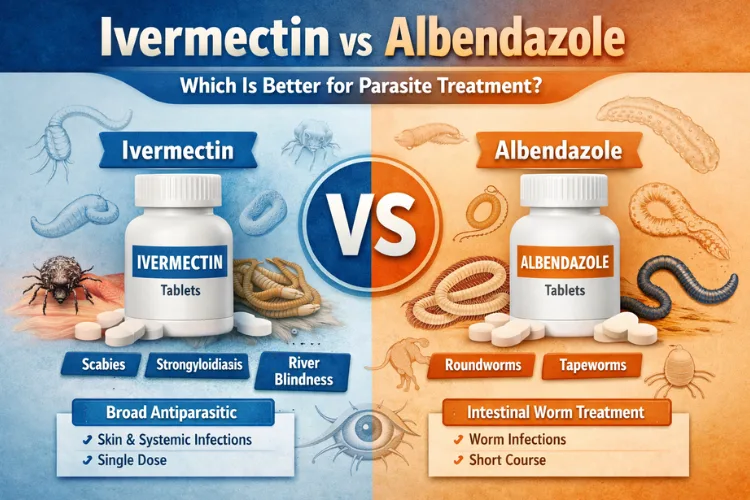
Although both drugs treat parasites, they work differently and are used for different types of infections. Choosing the right medication depends on accurate diagnosis rather than drug strength.
This guide provides a complete medical comparison of albendazole vs ivermectin, helping readers understand when each treatment is most effective.
What Is Albendazole?
Albendazole is a broad-spectrum antiparasitic medication belonging to the benzimidazole drug class.
Common Uses
Doctors prescribe albendazole to treat:
- Roundworms (Ascaris)
- Hookworms
- Whipworms
- Pinworms
- Tapeworm infections
- Hydatid disease
- Neurocysticercosis
It is widely used in global deworming programs because it treats multiple intestinal parasites simultaneously.Albendazole vs Ivermectin
How Albendazole Works
Albendazole blocks glucose absorption inside parasites. Without energy, worms gradually die and are eliminated from the body.Albendazole vs Ivermectin
What Is Ivermectin?
Ivermectin is an antiparasitic medication from the macrocyclic lactone class.Albendazole vs Ivermectin
Common Uses
Ivermectin is typically prescribed for:
- Strongyloidiasis
- Onchocerciasis (river blindness)
- Scabies
- Lice infestations
- Certain tissue parasites
How Ivermectin Works
Ivermectin interferes with parasite nerve and muscle function, causing paralysis and death.Albendazole vs Ivermectin
Unlike albendazole, ivermectin is especially effective against parasites living in tissues and skin.
Key Differences at a Glance
| Feature | Albendazole | Ivermectin |
|---|---|---|
| Drug Class | Benzimidazole | Macrocyclic lactone |
| Mechanism | Starves parasites | Paralyzes parasites |
| Main Target | Intestinal worms | Tissue & skin parasites |
| Treatment Length | 1–28 days | Often single dose |
| Spectrum | Broad intestinal | Tissue-focused |
| Absorption | With fatty food | Empty stomach |
Effectiveness Comparison
1. Intestinal Worm Infections
Albendazole is generally more effective for:
- Roundworms
- Hookworms
- Whipworms
- Mixed intestinal infections
It is often considered first-line treatment for soil-transmitted helminths.
👉 Winner: Albendazole
2. Strongyloidiasis
Clinical studies consistently show ivermectin achieves higher cure rates compared with albendazole for Strongyloides infections.Albendazole vs Ivermectin
👉 Winner: Ivermectin
3. Skin Parasites (Scabies & Lice)
Ivermectin works systemically and reaches parasites living in skin layers.
Albendazole is rarely used for these infections.
👉 Winner: Ivermectin
4. Tapeworm Larvae & Tissue Cysts
Albendazole penetrates tissues effectively and is widely used for neurocysticercosis and hydatid disease.
👉 Winner: Albendazole
Dosage Comparison
Albendazole Dosage (General Overview)
- Often 400 mg per day
- Single dose or multi-day course
- Taken with fatty food for better absorption
Longer treatment may be required for tissue infections.Albendazole vs Ivermectin
Ivermectin Dosage (General Overview)
- Weight-based dosing
- Usually single oral dose
- Sometimes repeated after 7–14 days
Taken on an empty stomach.
Which Works Faster?
Ivermectin often appears faster because:
- Single-dose therapy
- Rapid parasite paralysis
However, overall recovery depends on infection severity and immune response.
Albendazole may require longer courses but provides broader parasite clearance.
Safety and Side Effects
Both medications have strong safety records when prescribed correctly.
Common Side Effects (Both Drugs)
- Nausea
- Headache
- Dizziness
- Mild stomach discomfort
These symptoms may occur as parasites die.
Albendazole Side Effects
- Temporary liver enzyme elevation (long treatments)
- Abdominal discomfort
- Hair thinning in rare long-term use
Monitoring may be required for extended therapy.
Ivermectin Side Effects
- Fatigue
- Skin itching (immune reaction)
- Mild neurological symptoms (rare)
Reactions may occur when large numbers of parasites die simultaneously.
Which Is Safer?
For short treatments:
✅ Both are considered very safe.
General differences:
- Ivermectin: fewer systemic effects in single-dose therapy
- Albendazole: safe but requires monitoring during long courses
Safety depends more on correct dosing than medication choice.
When Doctors Choose Albendazole
Healthcare providers usually select albendazole when:
- Multiple intestinal worms suspected
- Broad coverage needed
- Tapeworm or larval infections diagnosed
- Imaging shows cyst infections
When Doctors Choose Ivermectin
Ivermectin is preferred when:
- Strongyloidiasis confirmed
- Scabies outbreaks occur
- Lice infestations persist
- Tissue parasites are involved
Can Albendazole and Ivermectin Be Used Together?
Yes — in certain medical situations.
Combination therapy may be used for:
- Resistant infections
- Mixed parasite infections
- Public health treatment campaigns
Medical supervision is essential because dosing must be carefully managed.
Cost and Availability
Generally:
- Albendazole is inexpensive and widely available.
- Ivermectin may cost more per dose but requires fewer tablets.
Availability depends on national medical regulations and prescription requirements.
Common Misconceptions
Myth 1: One Drug Is Stronger
Neither is universally stronger — they target different parasites.
Myth 2: They Treat the Same Conditions
They overlap slightly but serve different clinical roles.
Myth 3: Taking Both Improves Results
Combination therapy only helps in specific diagnosed cases.
Prevention After Treatment
Medication alone does not prevent reinfection.
Important steps include:
- Hand hygiene
- Washing bedding
- Proper food preparation
- Safe water consumption
- Treating close contacts when advised
FAQ: Albendazole vs Ivermectin
Which is better overall?
Neither — effectiveness depends on parasite type.
Is ivermectin stronger than albendazole?
No. They work differently and treat different infections.
Can ivermectin treat intestinal worms?
Some, but albendazole usually provides broader intestinal coverage.
Which works faster?
Ivermectin often acts faster due to single-dose therapy.
Can I take both together?
Only under medical supervision.
Do I need a prescription?
In most countries, yes.
Final Verdict: Albendazole vs Ivermectin
Both medications are essential antiparasitic treatments.
✅ Albendazole is best for:
- Intestinal worms
- Mixed infections
- Tapeworm larvae
✅ Ivermectin is best for:
- Strongyloides infections
- Scabies and lice
- Tissue parasites
The best choice always depends on diagnosis, not drug popularity.
Conclusion
Albendazole and ivermectin are among the most important antiparasitic medicines used today. Understanding their differences helps ensure effective treatment, faster recovery, and reduced risk of complications.
If you suspect a parasitic infection, consult a healthcare professional for proper testing and treatment guidance. Correct medication selection remains the key to successful therapy.