
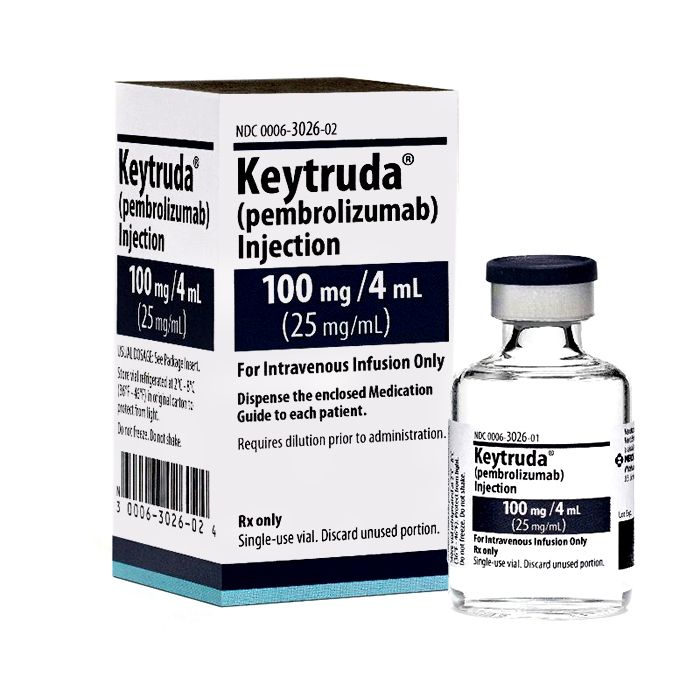
Keytruda (Pembrolizumab):
Over the past decade, the fight against cancer has transformed dramatically thanks to breakthroughs in immunotherapy — a treatment approach that strengthens the body’s own immune system to identify and destroy cancer cells. Among the most effective of these therapies is Keytruda® (Pembrolizumab), a medication that has redefined hope for patients battling several types of advanced cancer.Keytruda (Pembrolizumab)
In this article, we’ll explore how Keytruda works, the cancers it treats, its benefits, side effects, and why it’s considered one of the most important cancer treatments in modern medicine.Keytruda (Pembrolizumab)
What Is Keytruda?
Keytruda (generic name: Pembrolizumab) is an immunotherapy drug developed by Merck & Co. It belongs to a class of medications known as immune checkpoint inhibitors, specifically targeting the PD-1 receptor (Programmed Cell Death-1) on immune cells called T-cells.
Normally, the PD-1 receptor acts as a natural “brake” to keep the immune system from attacking healthy cells. However, cancer cells often exploit this pathway by producing PD-L1 proteins, which bind to PD-1 and effectively switch off the immune system’s attack.
Keytruda works by blocking the interaction between PD-1 and PD-L1, thereby releasing the brakes on the immune system. Once reactivated, T-cells can identify, target, and destroy cancer cells more effectively.Keytruda (Pembrolizumab)
Cancers Treated with Keytruda
Keytruda has received approval for treating more than 20 types of cancer, either as a standalone treatment or in combination with other therapies. Some of the most common indications include:
- Melanoma (advanced skin cancer)
- Non-Small Cell Lung Cancer (NSCLC)
- Head and Neck Squamous Cell Carcinoma (HNSCC)
- Classical Hodgkin Lymphoma
- Bladder (Urothelial) Cancer
- Cervical Cancer
- Esophageal and Gastric (Stomach) Cancer
- Triple-Negative Breast Cancer (TNBC)
- Colorectal Cancer (MSI-H or dMMR types)
- Liver Cancer (Hepatocellular Carcinoma)
- Kidney Cancer (Renal Cell Carcinoma)
- Endometrial Cancer
A major milestone in cancer therapy, Keytruda was the first drug approved by the U.S. FDA based on a tumor’s genetic features (biomarker status) — not the cancer’s location in the body. This means patients with tumors showing specific mutations (like microsatellite instability-high, MSI-H) can benefit regardless of where the cancer originated.Keytruda (Pembrolizumab)
How Keytruda Works
Keytruda is a humanized monoclonal antibody that binds to the PD-1 receptor on T-cells. By doing so, it prevents cancer cells from hiding behind the PD-L1 “shield.”Keytruda (Pembrolizumab)
Here’s a simplified breakdown of the process:
- Cancer cells produce PD-L1, which binds to PD-1 receptors on T-cells.
- This binding silences the immune system’s attack on cancer cells.
- Keytruda blocks PD-1, preventing PD-L1 from binding.
- T-cells are reactivated, allowing them to recognize and kill cancer cells.
This mechanism transforms the body’s natural immune defenses into a sustained, targeted weapon against cancer.Keytruda (Pembrolizumab)
Benefits of Keytruda
✅ Long-Lasting Results:
Unlike chemotherapy, which stops working soon after treatment, Keytruda can deliver long-term tumor control. Some patients experience complete or partial remission for years.
✅ Fewer Toxic Side Effects:
Keytruda does not damage healthy, fast-growing cells like chemotherapy does. Most side effects come from immune activation rather than toxicity.
✅ Broad Range of Applications:
Its effectiveness across multiple cancers makes it one of the most versatile immunotherapies available.Keytruda (Pembrolizumab)
✅ Personalized Treatment:
Keytruda can be prescribed based on specific biomarkers (PD-L1 expression, MSI-H, or TMB-high), improving treatment precision and success rates.
How Keytruda Is Administered
Keytruda is given as an intravenous (IV) infusion in a hospital or clinic setting. The treatment is typically administered:
- Every 3 weeks (200 mg), or
- Every 6 weeks (400 mg)
Each infusion takes about 30 minutes, and treatment continues until disease progression, unacceptable side effects, or completion of a prescribed duration (often up to two years).
Your oncologist will determine the schedule based on the type and stage of cancer being treated.
Potential Side Effects
Because Keytruda stimulates the immune system, side effects are primarily immune-related. Common reactions include:
- Fatigue
- Skin rash or itching
- Nausea
- Loss of appetite
- Joint or muscle painKeytruda (Pembrolizumab)
In rare cases, the immune system may attack healthy organs, leading to inflammation in:
- The lungs (pneumonitis)
- The liver (hepatitis)
- The colon (colitis)
- The thyroid or adrenal glands
Such effects are usually manageable with corticosteroids and medical supervision. Early detection is key — patients are closely monitored throughout treatment.
Keytruda vs. Chemotherapy
| Feature | Keytruda (Immunotherapy) | Chemotherapy |
|---|---|---|
| Mechanism | Boosts immune response to attack cancer | Kills rapidly dividing cells directly |
| Selectivity | Targets cancer indirectly via immune system | Affects both cancerous and healthy cells |
| Side Effects | Immune-related, often milder | Hair loss, nausea, fatigue, bone marrow suppression |
| Duration of Benefit | Long-lasting, even post-treatment | Typically short-lived |
| Treatment Personalization | Based on PD-L1 and genetic markers | Standardized dosing |
This comparison shows why immunotherapy like Keytruda has become the preferred first-line treatment for many advanced cancers.
Clinical Success and Research
Clinical trials have demonstrated that Keytruda significantly improves overall survival rates and progression-free survival across several cancer types. In some studies, patients on Keytruda lived twice as long as those receiving traditional chemotherapy.
Ongoing research is exploring new combinations — such as pairing Keytruda with chemotherapy, targeted therapy, or radiotherapy — to further enhance outcomes. Trials are also underway for early-stage cancers to determine if Keytruda can help prevent recurrence.
The Future of Cancer Care
Keytruda represents a monumental step forward in cancer treatment, symbolizing the shift toward precision medicine and immune-based therapies. By training the immune system to fight cancer, Keytruda offers new hope where few options once existed.
As research continues, the scope of Keytruda’s applications will likely expand, bringing more personalized and effective treatment strategies to cancer patients worldwide.
Final Thoughts
Keytruda (Pembrolizumab) is more than a cancer drug — it’s a revolution in oncology. By unlocking the power of the immune system, it has extended survival and improved quality of life for countless patients with advanced cancers.
If you or someone you know is exploring treatment options, discuss with an oncologist whether Keytruda may be suitable based on your cancer type and biomarkers. Immunotherapy continues to pave the way toward a future where cancer can be managed — and in some cases, even defeated — with the body’s own defense mechanisms.